Very true. Poetry is different from prose because it arranges the best words in musical order.
However, a poem being short, musical, and interesting is easy to learn by heart and to remember
for a long period.
The poetry of earth is made of the chirping of birds in trees, and a grasshopper’s sound. They sing
joyfully without a long break.
(i) He has never done with his delights.
(ii) The cricket’s song in warmth increasing ever.
The two major seasons in a year are summer and winter. Both are rich in music. In summer, the
representative voice is that of the birds and the grasshoppers. In winter, cricket is the prime
singer.
The grasshopper is the music provider in summer.
Birds remain silent and hide in the winter. It is because they don’t feel comfortable in the cold
weather.
There is silence all around in the winter. This silence is broken by crickets.
They start singing for merrymaking.
It So Happened
Chapter 5: Princess September
Comprehension Check (Page 38)
1. How many daughters did the royal couple have?
Ans. The Royal couple had nine daughters.
2. Why were they named after the months of the year?
Ans. They were named after the months of the year because the queen could not recall
their names easily.
3. The King had a peculiar habit. What was it? Why is it called peculiar?
Ans. The peculiar habit of the king was to give gifts on his birthday rather than receive them.
Usually, people get gifts on their birthdays.
4. (i) What was Princess September’s reaction to the loss of her parrot?
(ii) What was her Mother’s reaction to it?
(iii) What do the reactions indicate about the nature and temperament of each?
Ans. (i) Princess September took the loss of her parrot to heart. She wept continuously.
She was put to sleep without supper.
(ii) Her Mother said that Princess September’s weeping was simply nonsense. She asked the
maids to put the child to sleep without supper.
(iii) The princess was very simple-hearted and sensitive. She was stricken with grief when her
parrot died. But the Queen's mother was not moved at all. She had nothing to console the child.
5. What pulled the Princess out of her gloom?
Ans. The coming of a little songbird into her room comforted Princess September. She was so
enchanted that she forgot about her loss.
6. How did the Maids of Honour come to know that the Princess and the bird had become
intimate friends?
Ans. The Maids of Honour brought in the princess’s breakfast. The songbird ate rice out of the
princess’s hand and then sang sweetly. The Maids were surprised to find September so much
happy. They were convinced that the two had become good friends.
7. The new bird was full of new songs but the old parrots always repeated themselves. What did
they say?
Ans. The old parrots only repeated what they had been taught. They could only say ‘God save the
King’ and “Pretty Polly’.
8. What is the king’s opinion about his Councillors? Why did he form that opinion?
Ans. The King had a low opinion about his Councillors because, like parrots, they too repeated the
the same thing differently.
9. (i) The eight Princesses made an offer to Princess September. What was it?
(ii) Why, in your view, did they do it?
Ans. (i) They offered their pocket money to Princess September to buy another parrot,
(ii) They did that because they felt jealous of the song bird’s friendship with Princess
September.
10. What did the sisters advise the Princess to do about her bird?
Ans. The sisters advised the Princess to put the little bird into the cage lest it should fly away for
Comprehension Check (Page 43)
1. In the following sentence elaborate on the parts given in bold. Under the circumstances, it was a
very unfortunate remark for the bird to make.
Ans. The circumstance was that the bird hadn’t come back because of the party at his father-in-law’s house. The princess was naturally worried. The remark of the sisters added to her
worry.
2. (i) What did Princess September do to ensure the safety of her pet?
(ii) How did the bird react to it?
Ans. (i) Princess September put the bird into a cage to ensure his safety.
(ii) The bird disliked his imprisonment. He stopped singing.
3. Why did the bird refuse to be taken out in her cage?
Ans. The bird said that he won’t be really happy and normal if he was taken out in her cage. The
rice-fields arid the lake looked quite different and dull when seen through the cage bars.
4. (i) What persuaded Princess September to give the bird his freedom again?
(ii) How did the bird react to it?
Ans. (i) The Princess freed the bird lest he should die in captivity.
(ii) The Princess kept the window open so that the bird might fly in and out making fresh air
charming. Freedom helped the bird to sing and enjoy himself.
5. Princess September kept her window open day and night.
(i) How did it help the bird?
(ii) How did it help the Princess herself?
Ans. (i) The bird opened his wings and flew away.
(ii) It helped the Princess herself by providing her with fresh wind and natural light. It helped her
make her beautiful.
6. The eight sisters kept their windows shut. How did it affect them?
Ans. The eight sisters who kept their windows shut all night became extremely ugly and
disagreeable. They were married to the councilors.
Exercise (Page 44)
Discuss the following questions in small groups. Write their answers later.
Question 1:
Are the sisters unkind and cruel? Find evidence in the text to support your idea.
Answer:
Yes, the eight sisters of the princess were unkind and cruel. They were jealous too. They advised
her to encage the bird. This suggestion might have killed the bird.
Question 2:
Which, to you, is the most important idea in this story, and why?
(i) importance of music (ii) value of freedom (iii) beauty of nature
Answer:
(i) value of freedom.
MORE QUESTIONS SOLVED
I. SHORT ANSWER TYPE QUESTIONS
Question 1:
What did the King of Siam give his daughters one year on his birthday?
Answer:
One year on his birthday, the King of Siam gave each of his daughters a green parrot in a golden
cage.
Question 2:
What happened to Princess September’s parrot one day? How did the princess react to it?
Answer:
One day, Princess September found her parrot lying dead at the bottom of its golden cage. She
burst into tears suddenly. She cried so much that the Queen got angry and told her to go to bed
without any supper.
Question 3:
What made Princess September act upon her sister’s advice?
Answer:
After the death of her lovely parrot; Princess September got the company of a little songbird. He
comforted her with his sweet songs. One day, her sisters advised her to put the bird into a cage
lest he should fly. Princess September loved the bird too much to take chances. So, she acted
upon their advice.
Question 4:
Why was the little songbird surprised?
Answer:
The little songbird was surprised to see how ruthlessly Princess September treated him one day.
She carried him over to a cage, popped him in, and shut the door on him. He became speechless.
For a moment he could think of nothing to say.
Question 5:
Who was Princess September married to? Why?
Answer:
Princess September was married to the King of Cambodia because she was extremely beautiful.
II. LONG ANSWER TYPE QUESTIONS
Question 1:
Suppose you are Princess September. Give a brief account of your heartbreaks, sufferings, and
eventual happiness.
Answer:
I am the ninth daughter of a royal couple of Siam. My father,- the King, used to give gifts to us on
his birthdays. One year, on his birthday he gave each one of the princesses a green parrot in a
golden cage. I also got a parrot in a golden cage. All other sisters taught the bird to say ‘God save
the King’ and ‘Pretty Polly’. But I was different from them. Unfortunately, my parrot died one day. I
wept and wept. I slept without supper. At night a small songbird flew into my room. It sang so
sweetly that I forgot the loss of my parrot. I showed it to my sisters. They grew jealous of my
happiness. They advised me to put the bird in a cage. And I acted foolishly upon that advice. The
bird stopped singing. It appeared to be dead. So I set it free. I then had the last laugh. I was
married to a Prince of Combodia while my sisters were ugly and were married to my father’s
councilors.
Question 2:
Compare and contrast the characters of Princess September and her other eight sisters.
Answer:
Princess September was different from her elder sisters. She was sweet-natured and simple-hearted. She cried bitterly when her parrot died. A little bird made her happy with his song. Her
sisters were jealous, mean, and wicked. They made a plan to rob her of her happiness. They told
her to put the bird in a cage. Their wicked plan worked for a while. The bird stopped singing in
captivity. Princess September cared more for the bird’s life than her own happiness. So she let him
off. She was duly rewarded for her goodness.
Chapter 8: Jalebis
Comprehension Check (Page 65)
1. Why didn’t he pay the school fees on the day he brought money to school?
Ans. The boy couldn’t pay the school fees on the day he was brought to school because the
teacher Master Ghulam Mohammed was on leave.
2. (i) What were the coins ‘saying’ to him?
(ii) Do you think they were misguiding him?
Ans. (i) The coins in the boy’s pocket urged him to buy hot and fresh jalebis.
(ii) Yes, the coins were misguiding him because the money was meant for paying
school fees.
3. Why didn’t he take the coin’s advice? Give two or three reasons.
Ans. Initially, the boy didn’t take the advice of the coins seriously for a couple of reasons.
He could not spend the money meant for paying school fees on jalebis. Secondly, the
boy knew the harsh nature of the master and the punishment.
4. (i) What did the oldest coin tell him?
(ii) Did he follow his advice? If not, why not?
Ans. (i) The oldest coin convinced him that they were telling him for his own good. He can
pay his fee the next day with his scholarship money. So he should not suppress his desire
for jalebis.
(ii) He didn’t follow his advice. He was a promising student. He was from a good
family of repute. He didn’t want to get defamed for it.
5. He reached home with the coins in his pocket. What happened then?
Ans. After reaching home he couldn’t suppress his temptation for fresh Jalebis. He rushed
to the shop of halwai. He bought jalebis and enjoyed them.
Comprehension Check (Page 68)
1. (i) Why didn’t he eat all the jalebis he had bought?
(ii) What did he do with the remaining Jalebis?
Ans. (i) He had bought jalebis for one rupee. But he couldn’t eat all of them because of
their quantity.
(ii) He distributed the remaining jalebis among the boys from the neighborhood.
2. “The fear was killing me.” What was the fear?
Ans. He had eaten so many jalebis that there was the problem of digesting them all. His
fear was that one jalebi or two would come out with a burp.
3. “Children’s stomachs are like digestion machines.” What do you understand by that?
Do you agree?
Ans. It means that children can digest a lot of things that they overeat. I
agree with the statement but only partly.
4. How did he plan to pay the fees the next day?
Ans. He planned to pay the fees the next day when he would get his monthly scholarship.
5. When it is time to pay the fees, what does he do? How is he disobeying the elders by
doing so?
Ans. When the time draws near to pay the fees, he tucked the bag under his arm and slips
out of the school. He had disobeyed his elders by crossing the railway track.
Comprehension Check (Page 72)
1. What was the consequence of buying jalebis with the fees money?
Ans. As a result of spending his fees money on jalebis, he had to be absent from school for
the first time in his life.
2. His prayer to God is like a lawyer’s defense of a bad case. Does he argue his case
well? What are the points he makes?
Ans. He tries to please God with his requests and the recitation of the entire namaz. He
admits that he made a mistake. He wouldn’t have spent his money on jalebis if he had
known about the delay in scholarship. Thus, he argues his case like a lawyer.
3. He offers to play a game with Allah Miyan. What is the game?
Ans. The game is that he will go up to the signal, touch it and come back. And in the
meantime God should put four rupees under a big rock.
4. Did he get four rupees by playing the game? What did he get to see under the rock?
Ans. No, he didn’t get four rupees by playing the game. When he lifted the rock, he saw a
worm instead of coins.
5. If God had granted his wish that day, what harm would it have caused him in later life?
Ans. If God had granted his wish that day he wouldn’t have learned a lesson to do no wrong
in the future. He would have been like a bird and learned no skill.
EXERCISE (PAGE 72)
Work in small groups.
Question 1:
Select and read sentences that show
(a) that the boy is tempted to eat jalebis.
(d) that he is feeling guilty
(c) that he is justifying a wrong deed.
Answers:
(a)
• Jalebis are meant to be eaten, and those with money in their pocket can eat them.
• But then, these jalebis are no common sort of Jalebis They’re crisp, fresh, and full of
syrup.
• My mouth watered. I rushed out of the house barefoot and ran towards the bazaar.
(b)
• My head started to spin.
• When the recess bell rang I tucked my bag under my arm and left the school.
• Now for the crime of eating a few Jalebis, for the first time in my life I was absent
from school.
• Sitting under a tree, at first I felt like crying.
(c)
• I didn’t eat them all by myself, and I fed them to a whole lot of children.
• Allah Miyan! I am a good boy. I have memorized the entire namaz and the last –
ten surahs of the Quran by heart.
Question 2:
Discuss the following points.
(a) Is the boy intelligent? If so, what is the evidence of it?
(b) Does his outlook on the jalebis episode change after class VIII? Does he see that episode in a
new light?
(c) Why are coins made to ‘talk’ in this story? What purpose does it serve?
Answers:
(a) The boy is definitely intelligent. The first evidence is that he has won a scholarship. He is a
promising boy. He knows what is right and what is wrong. He argues his case before God like a
lawyer.
(b) Yes, his outlook changed after class VIII. He later realized that nothing comes without a price.
If God were to grant all one’s wishes for the asking, man would not learn any skill. He would be no
better than birds.
(c) The coins are made to talk because they reflect the conflict going on in his own mind.
MORE QUESTIONS SOLVED
I. SHORT ANSWER TYPE QUESTIONS
Question 1:
How did the coins persuade the boy to buy jalebis?
Answer:
The coins told the boy that the jalebis were fresh, crisp, and syrupy. They were meant to be eaten
and only those with money in their pocket could eat them.
Question 2:
How did the boy respond to the coins?
Answer:
The boy didn’t heed to the coins. He was a good and intelligent boy. He told the coins not to
misguide him. He got so much at home that he considered even looking at something in
the bazaar a sin.
Question 3:
Why did the boy hold all the four coins tight in his fist?
Answer:
All four coins began to speak at the same time to make the boy ready to buy the
jalebis. There was such a clamor that passersby in the bazaar stared at him and his pocket. So,
the boy grabbed all of them and held them tight in his fist to make them silent.
Question 4:
Did the boy eat all the jalebis by himself? What can you say?
Answer:
The boy didn’t eat all the jalebis by himself. He ate himself to his heart’s content and distributed
the best among the boys from the neighborhood.
Question 5:
Why did the boy’s head start to spin in the school?
Answer:
As soon as he reached the school, he came to know that the scholarship was going to be paid the
following month. This news intensified his tension so much that his head started to spin.
II. LONG ANSWER TYPE QUESTIONS
Question 1:
Comment on the significance of the jalebis in the story.
Answer:
Jalebis are central to the story. These are hot, fresh, and syrupy. A schoolboy falls to the sweet
temptation of jalebis. He spends all his school fees money on buying jalebis. He eats himself and
also distributes them among children. He regrets his weakness later. He prays to God to send him
four rupees. But he gets no help from God. He realizes in later life that God cannot meet
everybody’s demands. Was he so generous, man would not have developed the skill of making
jalebis.
Question 2:
Write a short note on the character of the schoolboy in Jalebis.
Answer:
The schoolboy in the story Jalebis carries four rupees to school to pay the school fees. He is
an honest, God-fearing, and brilliant student. He has won a scholarship also. He has never been
punished. He enjoys prestige. He feels shy of standing in the bazaar and eating jalebis. But the
coins in his pocket persuade him to go wrong. And he repents his foolishness. He asks for God’s
help. He can recite the namaz and some portions from the Quran. His experience, however,
teaches him a valuable lesson.
Question 3:
How does the schoolboy try to please God to come to his rescue?
Answer:
The schoolboy faces a crisis after he has spent his school fees on the jalebis. He turns to Allah
Miyan for help. He apologizes to God. He promises to never repeat that mistake and recites
the namaaz and a few verses from the Quran. He hopes in vain that God will put money under the
rock. He plays a game with God. But he finds no coins but a hairy worm under the rock
Grammar
Tenses
(Formation of Tenses)
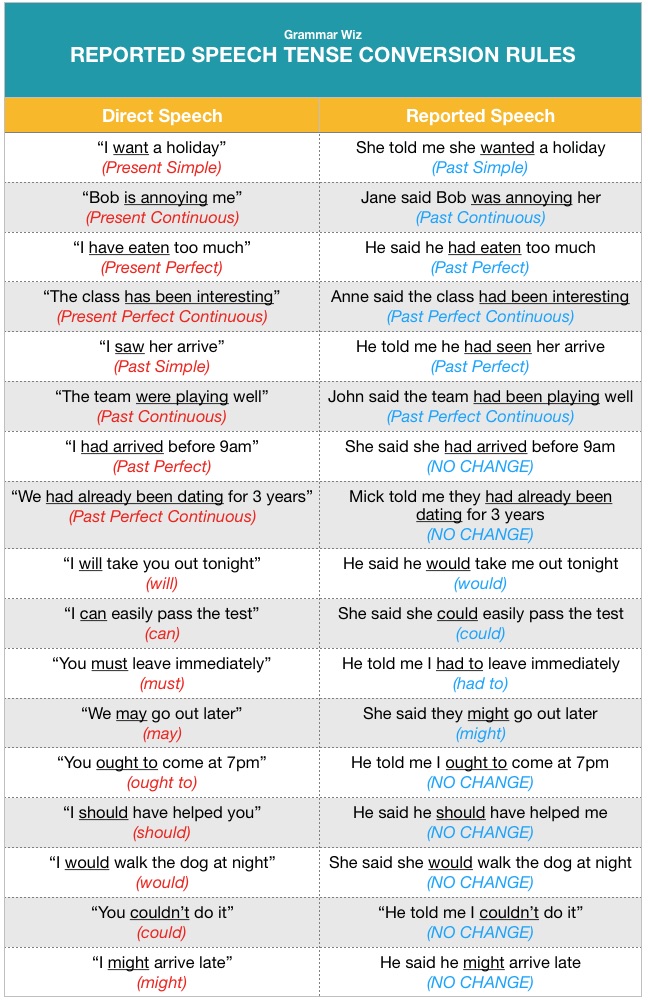
Reported Speech
(Change of Tenses)


Comments
Post a Comment